June 2026
June Issue
Published · Updated · By Davide Solla
A June edit built around images that gather force in public: Pan-African art at the Barbican, Japanese women photographers in Soho, architectural experiment in Kensington Gardens, and fashion campaigns that use sport, street rhythm and collective identity as part of the visual argument.
01 — Art
A London-facing edit for photography, portraiture, contemporary art and image culture.

Project a Black Planet: The Art and Culture of Panafrica
Barbican’s exhibition follows Pan-Africanism as a visual, political and cultural force from the 1920s to the present. More than 300 works move across painting, installation, poster, journal and film, with artists including Chris Ofili, Marlene Dumas, Claudette Johnson and Liz Johnson Artur.
Why it matters visually: It treats image-making as a shared geography of rupture, archive, solidarity and imagination, with photography sitting beside posters, journals, painting and film.
Book ticketsJapanese Women Photographers: From 1950s to Now
The Photographers' Gallery places 27 Japanese women artists across post-war, contemporary and experimental practice, with more than 200 photographs, videos, installations and rare photobooks. The exhibition, organised with Aperture and Rencontres d'Arles, rewrites a history often told through a narrower lens.
Why it matters visually: It opens a wide photographic field around authorship, social change, intimacy, colour, publication and the politics of who gets to define a national visual history.
Book ticketsSerpentine Pavilion 2026 by LANZA atelier
LANZA atelier's 2026 Pavilion, a serpentine, anchors itself in the crinkle-crankle wall, using brick, curve and repetition to make a structure that shifts between opacity and openness. It is a quiet June reference for how rhythm, material and public movement can shape an image.
Why it matters visually: It makes architecture behave like a photographic study of pattern, shadow, permeability and bodies moving around a curved line.
View pavilionM.C. Escher. The Exhibition
Somerset House brings M.C. Escher to London in a major summer presentation co-produced by Arthemisia and Fever. The exhibition foregrounds impossible structures, spatial illusion, repeat pattern and graphic precision, making it useful for anyone studying how composition can make logic feel unstable.
Why it matters visually: Escher's visual language sharpens questions of pattern, perspective, optical tension and the moment a flat image begins to behave like architecture.
Book tickets02 — Fashion
A compact visual edit of campaigns, launches and creative direction selected for image-making rather than product noise.

Originals are the Real Thing
The adidas Originals and Coca-Cola campaign turns football anticipation into a summer street scene: a bus, a group of characters, red-and-white graphics and 2000s sportswear energy. The styling works because it keeps the collection close to movement, heat, public space and collective memory rather than presenting it as isolated product.
Source visual: Official adidas Originals x Coca-Cola press image from adidas News.
View official source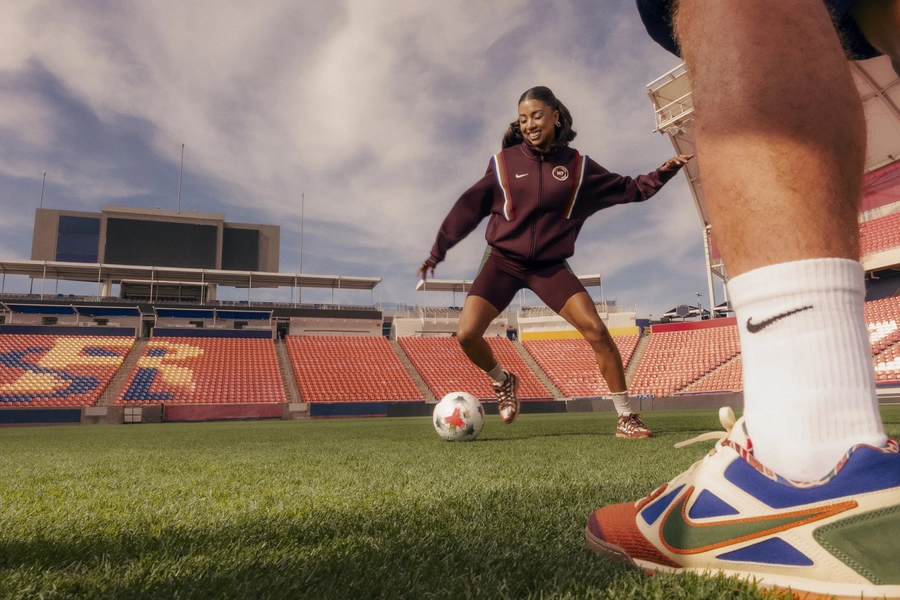
Summer 2026 N7 collection
Nike's summer N7 collection uses football-inspired sportswear as a platform for Indigenous visibility, photographed around athletes Madison Hammond and T.J. Kahoalii. The campaign works through representation rather than spectacle: national pitch language, graphic identity and community memory held in a clean, contemporary sportswear frame with quiet visual confidence and presence.
Source visual: Official Nike N7 campaign image from NIKE, Inc.
View official source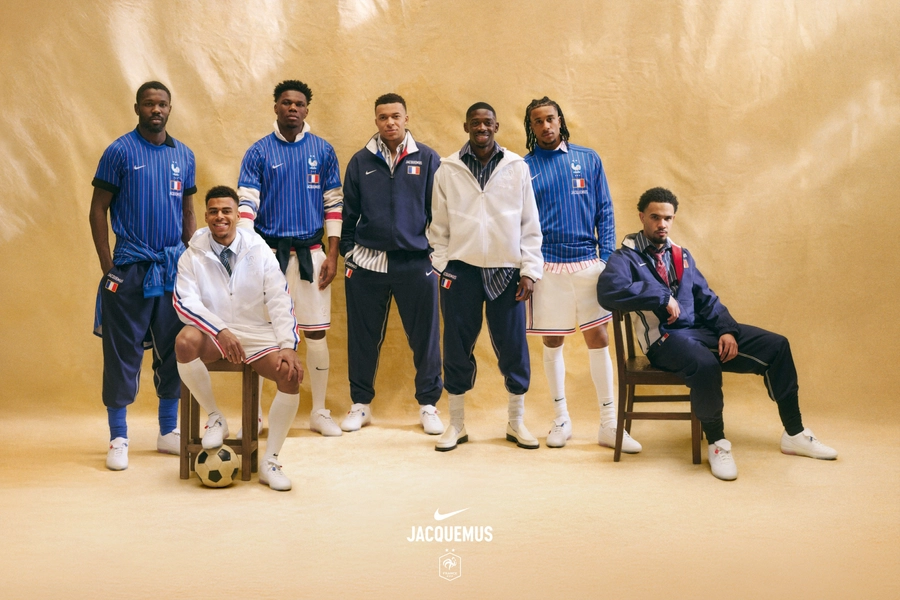
From pitch to street to community
Nike's football culture release places federation kits, X2 collaborations, Cryoshots and street-facing design in the same visual system. The Jacquemus X2 image has the useful June tension: a performance object treated like fashion, with scale, colour, styling and product theatre doing as much visual work as the object itself onscreen.
Source visual: Official Nike Football culture image from NIKE, Inc.
View official source